


🍢 The Street Food Safari: A Beginner’s Guide to Seoul’s Night Markets
- Jan 14
- 3 min read
If you’re visiting Seoul in 2026, you’ll quickly realize that some of the best meals in the city don’t come with a table and chairs. They come in a paper cup, on a wooden skewer, or wrapped in a napkin while you stand on a busy street corner.
Street food is the heartbeat of Seoul’s nightlife. But if it’s your first time, the sheer variety (and the crowds) can be a bit overwhelming. Here is how to navigate the markets like a pro and what you absolutely shouldn't miss.
📍 Where to Go: The Big Three
1. Myeongdong: The "New & Trendy" Hub
Myeongdong is where street food gets creative. This is the place to go for the "Instagrammable" snacks you’ve seen online—think grilled lobster with cheese, marshmallow ice cream, and giant 32cm tall soft-serve cones. It’s a bit more expensive than other markets, but it’s the most "tourist-friendly" with menus in English.


ⓒPhoto Korea - KTO, Lee Bumsu and Jeon Hyeongjun
2. Gwangjang Market: The Traditional Soul
If you want to eat like a local, go here. Gwangjang is famous for its "food alleys" where grandmothers have been flipping Bindaetteok (mung bean pancakes) for decades. It’s loud, it’s steamy, and it’s delicious.
Insider Tip: Look for the stalls with the longest lines for Kkwabaegi (twisted donuts)—they are worth the 20-minute wait!


ⓒPhoto Korea - IR Studio and KTO, Lee Bumsu
3. Namdaemun Market: The Breakfast & Lunch Spot
While most markets peak at night, Namdaemun is great during the day. Don’t leave without trying the Hotteok (sweet cinnamon pancakes) near the Gate 2 entrance. They are famous for a reason.

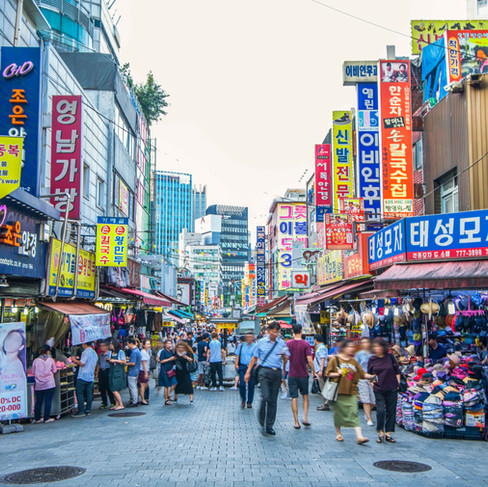


ⓒPhoto Korea - Live Studio and KTO, Jeon Hyeongjun
😋 The "Must-Eat" Starter Pack
If you’re not sure where to start, these four are the classics:
Tteokbokki (Spicy Rice Cakes): The quintessential Korean snack. Chewy rice cakes in a thick, spicy, and slightly sweet red sauce.

ⓒPhoto Korea - KTO, Kim Jiho
Odeng (Fish Cake Soup): These are served on long skewers in a hot broth. The best part? You can usually grab a cup and help yourself to as much broth as you want—it’s free and the best way to warm up in January!

ⓒPhoto Korea - Live Studio
Gyeran-ppang (Egg Bread): A small, fluffy loaf of sweet bread with a whole egg baked inside. It’s the perfect mix of sweet and salty.

ⓒPhoto Korea - Alexbundo
Mandu (Dumplings): Usually sold in portions of 5 or 6. You can choose between pork or spicy kimchi fillings.

ⓒPhoto Korea - KTO, Kim Jiho
💡 3 Things Nobody Tells You About Korean Street Food
1. The "Trash" Struggle is Real
Korea has very few public trash cans. Most people eat their snack right at the stall where they bought it and hand the trash back to the vendor. If you walk away with your food, you might be carrying that empty cup for a while!
2. Cash vs. Card
In 2026, most stalls in Myeongdong accept cards or even Apple Pay, but at traditional markets like Gwangjang, cash is still king. Keep some 1,000 and 5,000 KRW bills in your pocket for the smaller, more authentic stalls.
3. The "Service"
If you’re sitting at a stall and the vendor suddenly hands you a small extra dumpling or a cup of soup for free, don’t be confused—this is called "Service." It’s a common way for Korean vendors to show hospitality to travelers. Just say "Kamsahamnida" (Thank you) and enjoy!
✨ Final Thought
The best way to experience a Korean market isn't to follow a strict plan. Just walk until you smell something amazing, look for the stall with the most locals standing around it, and point at whatever looks good.
Happy snacking!

Comments